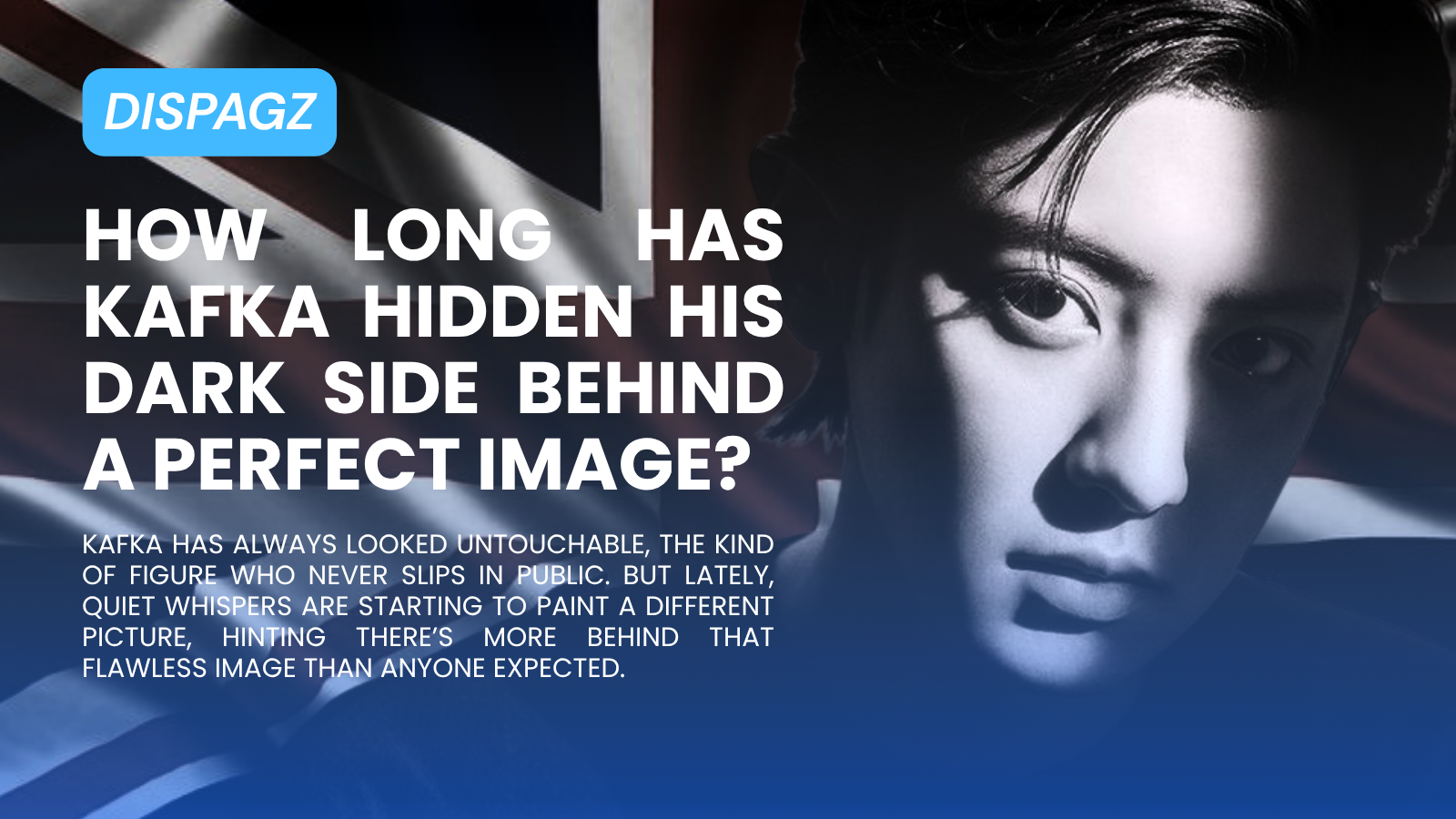
For years, Kafka has stood at the center of the media industry as one of its most admired figures. As the CEO of several major media companies, he's built a reputation that feels almost too good to question. He shows up for youth events, supports creative communities, and carries himself with a kind of charm that's hard to ignore. People describe him as warm, thoughtful, even funny. The kind of leader who feels approachable despite his status.
Beyond his influence in the media industry, Kafka is also known to have a presence in the cultural sector. He is reportedly one of the key shareholders behind a prominent museum in South Korea and has been involved in supporting several large-scale exhibitions. His contributions to the art scene have often been viewed as an extension of his public image—refined, visionary, and deeply connected to creative communities.
But lately, that image hasn't felt quite as solid as it once did.
A source, who asked to be identified only as "Y," claims that the Kafka seen in public may only be a fraction of who he really is. According to them, there's a striking contrast between his public persona and his private self. They described it as looking at an iceberg, where what's visible above the surface is calm and controlled, but what lies underneath is far deeper and darker than most people would expect.
That perspective is impossible to verify on its own, but it has started to echo alongside other quiet conversations happening behind the scenes.
In recent months, unverified rumors circulating that Kafka was once seen at the London Psychiatry Clinic. While there has been no official confirmation and no medical professional has spoken on record, the whispers have intensified ongoing speculation regarding his mental well-being.
What makes the situation more complex is what's being said about his life away from the spotlight. A former staff member who once worked in the Kafka family residence in London described an atmosphere that felt very different from the image people are used to seeing. According to them, Kafka appeared more distant and tense at home, nothing like the relaxed and engaging figure presented in public.
They also shared that he rarely chose to stay at the residence itself. Instead, he often preferred spending nights in hotels. The reason, they suggested, had a lot to do with his relationship with his father, Edward Kafka.
There are also claims that his professional independence may not be as complete as it appears. While Kafka leads multiple companies, those businesses are reportedly still tied to Kafka Company, an entity controlled by his father. The same source believes this has kept him in a position where stepping away isn't as simple as it looks, especially if the relationship between them is as strained as described.
Kafka has not responded to any of these claims, and without confirmation, much of this remains speculation.
Even so, the growing contrast between who he appears to be and who he might be behind closed doors is becoming harder for people to ignore.
It leaves a lingering question that doesn't have a simple answer. Is Kafka really the person the public has come to admire, or is that image only part of a much more complicated story?
Komentar
1.2k+